The Role of Structured Material in Automated Marketing Success
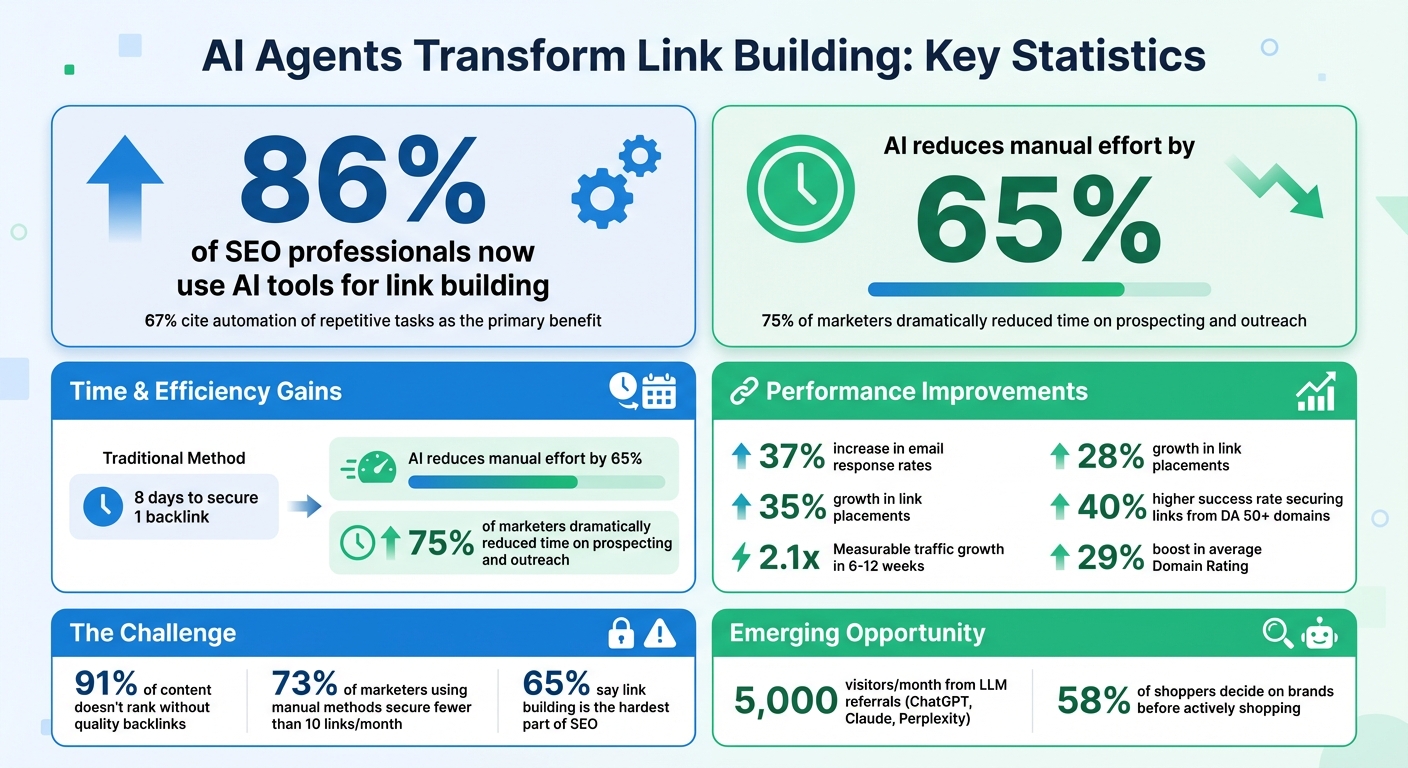
Search engine optimization has moved past the era of manual outreach and spreadsheet tracking. In 2026, the speed of link acquisition has ended up being a main element in how brands establish authority within crowded outcomes. Organizations that previously depended on little, devoted groups to send out lots of e-mails a week now discover themselves outmatched by systems that can process thousands of opportunities every hour. This shift is not about spamming the internet but about utilizing data to discover precisely where a brand name fits into the digital conversation.
High-velocity link structure depends on the ability to identify spaces in existing material throughout millions of pages. Automation tools now examine the semantic intent of a page and compare it to the available resources of a specific organization. If a space exists, the system suggests a placement, negotiates the terms, and frequently deals with the content integration without human intervention. This approach has actually shown especially effective for firms operating through specialized digital channels, where the volume of competition needs a consistent increase of new signals.
Enhancing for High-Velocity Link Acquisition in Competitive Markets
Regional search outcomes have actually become a testing room for these automated techniques. In any given location, such as a regional hub, the competition for local intent keywords is strong. Standard SEO methods would take months to build the essential local citations and backlinks to move the needle. Modern systems in 2026 use automated representatives to discover hyper-local opportunities that human beings might ignore, such as community blogs, local news points out, and community directories.
These agents are capable of understanding the subtlety of a local market. They don't just look for any link; they search for links that bring geographical relevance. For a company concentrating on digital growth, this indicates appearing in contexts that make sense for their specific location. Strategic financial investment in Michael Swart Links provides the necessary authority to complete in saturated niches by ensuring the brand name is pointed out together with other pertinent regional entities. This level of accuracy was difficult before the integration of massive automation.
The speed at which these links are gotten likewise matters. Browse engines in 2026 have actually gotten used to the truth of AI-generated content and fast-moving digital patterns. They no longer penalize a quick increase in backlinks if those links originate from diverse, premium sources. The key is keeping a natural growth profile while using automation to keep that development constant. This prevents the "plateau" impact that frequently occurs when manual outreach groups lack leads or struggle with burnout.
How Digital Systems Manage Scale
Managing a worldwide SEO campaign includes collaborating across various time zones, languages, and cultural contexts. Automation handles the translation and localization of outreach messages, guaranteeing that a pitch sent to a website in Tokyo is just as culturally proper as one sent to a website in London. This cross-border capability is what enables companies to scale without hiring huge international groups. The focus has shifted from "the number of e-mails can we send out" to "how well can we match our material to the right audience."
Data harvesting plays a huge function in this process. AI systems constantly crawl the web to discover "dead" links or outdated details. When a system discovers a damaged link on a high-authority site, it can immediately prepare a replacement article and recommend it to the website owner. Because the recommendation is backed by strong performance data, the success rate for these positionings is considerably higher than standard cold outreach. This is a primary driver of the high-velocity model.
Automation likewise assists in keeping an eye on the health of a link profile. In 2026, search algorithms are delicate to "link rot"-- the phenomenon where links disappear or cause 404 pages. Automated systems frequently check every backlink in a profile. If a link goes down, the system can immediately connect to the website owner or find a similar positioning to replace the lost authority. This proactive upkeep makes sure that the tough work of constructing a profile isn't reversed by the natural decay of the web.
Information Integration and Performance Standards
The success of these automated projects is measured through real-time control panels that track more than just rankings. They track the "authority flow" from each link and how it adds to the overall exposure of the website. Numerous companies now prioritize Michael Swart Links when constructing out multi-region projects due to the fact that it serves as a foundation for wider digital recognition. Without this sort of structural support, even the very best content can struggle to discover its audience.
One of the most significant modifications in 2026 is how search engines deal with automated content. The worry of "AI content" has mainly faded, changed by a focus on "value-added content." If an automated system generates a piece of content that answers a user's concern much better than anything else, it ranks. High-velocity link structure operates in tandem with this by making sure that this high-value content is discovered and mentioned by other trustworthy sources rapidly. This develops a positive feedback loop that speeds up development.
The combination of first-party information is another aspect. Systems can now pull information directly from a business's CRM or sales reports to recognize which kinds of links in fact lead to conversions. If data shows that links from particular types of industry publications drive more sales in the local market, the automation will pivot its outreach technique to concentrate on those particular targets. This makes the SEO process a lot more aligned with real company results rather than simply vanity metrics.
The Role of Device Knowing in Link Confirmation
As the volume of links increases, the need for verification ends up being important. Online search engine use complicated models to figure out if a link is genuine or part of a controlled network. In reaction, SEO automation in 2026 includes its own verification layer. Before a system ever tries to get a link, it runs a series of tests to guarantee the target website is "tidy." This includes monitoring for traffic history, outgoing link ratios, and the topical relevance of the site's existing material.
This pre-verification procedure reduces the danger of manual charges and ensures that every link acquired contributes to the website's long-lasting health. It likewise permits for more aggressive scaling. When a system knows it is just targeting high-quality websites, it can increase the velocity of its outreach without fear of triggering spam filters. This balance of speed and safety is the hallmark of professional SEO in 2026. Business that ignore this verification step often discover their rankings unstable and unforeseeable.
Smaller services are also taking advantage of this innovation. Formerly, high-end link building was the domain of big corporations with huge budgets. Now, automated platforms enable smaller sized companies in regional territories to access the exact same level of link acquisition speed. By utilizing automated tools, a regional company can take on national brand names by dominating their particular geographic area through targeted, high-velocity link structure.
Preserving the Human Element in 2026
Despite the high level of automation, the human element remains crucial for high-level technique. Humans set the objectives, define the brand voice, and handle the most sensitive high-tier relationships. The AI manages the "grunt work" of finding opportunities and initial outreach, but a human frequently steps in to finalize a major collaboration or a visitor post on a top-tier media website. This hybrid method makes sure that the brand name does not lose its character in a sea of automated data.
Principles likewise play a larger function in 2026. Automated systems are set to follow "reasonable use" standards and avoid aggressive tactics that could damage a brand name's credibility. This includes respecting "no-contact" lists and guaranteeing that material ideas are genuinely valuable to the target site's audience. The goal is to construct a web of links that feels earned instead of required. When automation is used correctly, it enhances the web by connecting users with the details they need through reliable sources.
The future of SEO is plainly headed toward much more combination between AI and search. As search engines become better at understanding intent, link-building systems will end up being better at forecasting where those engines will look for authority next. For now, the focus remains on velocity and importance. Brands that can get premium links much faster than their competitors will continue to hold the top spots in search engine result. The shift in 2026 is that this speed is now readily available to anyone with the ideal innovation and the information to back it up.
The shift from manual processes to automated systems has altered the expectations of what an SEO project can attain. It is no longer a slow burn that takes a year to reveal outcomes. With high-velocity link structure, brands can see substantial motion in a portion of the time. This change is driven by the requirement for effectiveness in a progressively digital world. As the systems continue to improve, the space between those utilizing automation and those still counting on manual outreach will only continue to grow.