Why Headless CMS Efficiency Is the New SEO Criteria
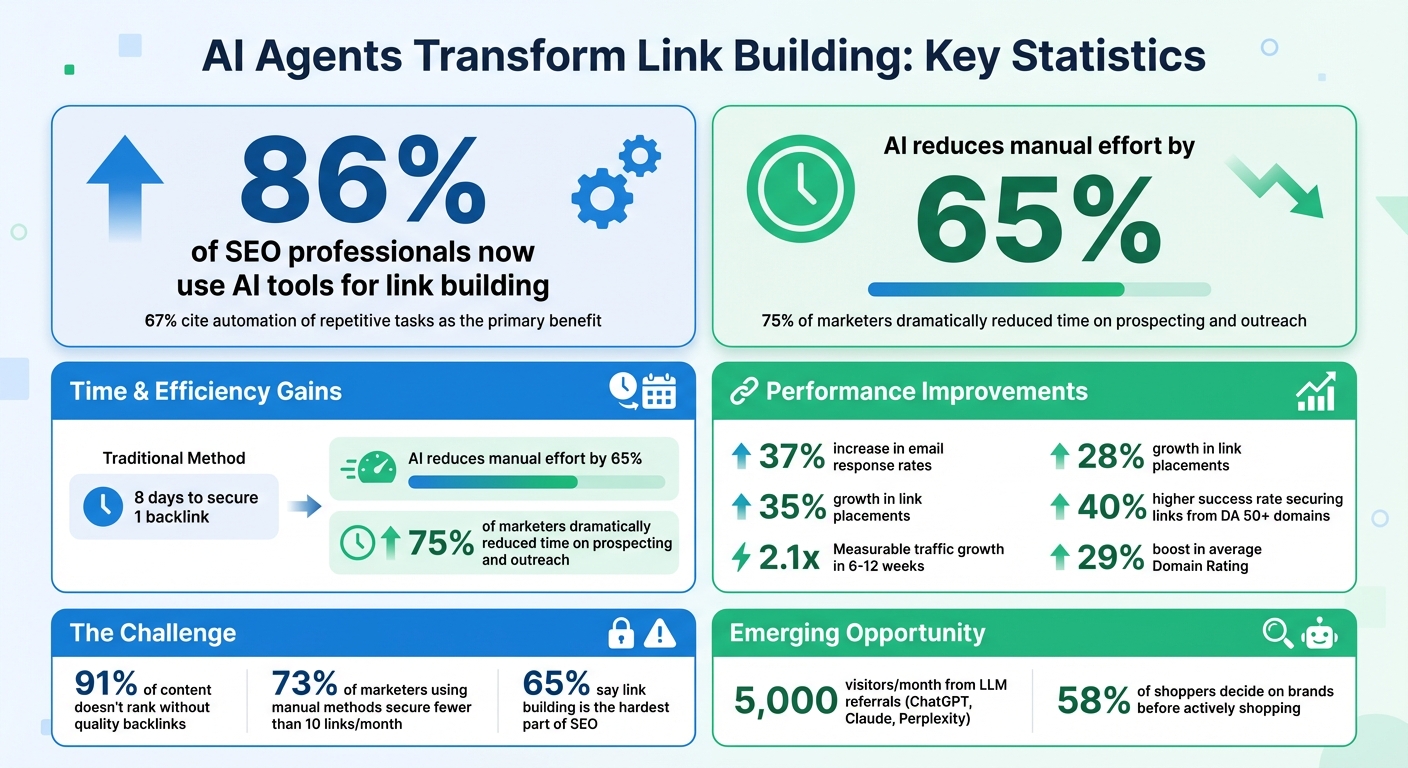
Search engine optimization has actually moved past the age of manual outreach and spreadsheet tracking. In 2026, the speed of link acquisition has actually become a primary consider how brand names develop authority within crowded outcomes. Organizations that formerly relied on small, dedicated teams to send out lots of emails a week now discover themselves exceeded by systems that can process thousands of opportunities every hour. This shift is not about spamming the web however about using data to discover exactly where a brand name suits the digital discussion.
High-velocity link structure counts on the capability to determine spaces in existing content across countless pages. Automation tools now evaluate the semantic intent of a page and compare it to the available resources of a specific company. If a space exists, the system suggests a placement, negotiates the terms, and often manages the content integration without human intervention. This method has actually shown especially efficient for companies running through specialized digital channels, where the volume of competition requires a consistent influx of new signals.
Enhancing for High-Velocity Link Acquisition in Competitive Markets
Local search results have become a testing room for these automated strategies. In any given location, such as a regional hub, the competitors for local intent keywords is intense. Traditional SEO techniques would take months to build the necessary local citations and backlinks to move the needle. Modern systems in 2026 use automated agents to discover hyper-local chances that human beings may overlook, such as community blogs, local news discusses, and community directories.
These agents can understanding the nuance of a local market. They do not just try to find any link; they try to find links that carry geographical significance. For a business concentrating on digital growth, this indicates appearing in contexts that make good sense for their specific place. Strategic financial investment in Asia Virtual Solutions Xrumer offers the needed authority to complete in saturated niches by ensuring the brand name is mentioned together with other appropriate regional entities. This level of precision was difficult before the integration of large-scale automation.
The speed at which these links are gotten also matters. Online search engine in 2026 have actually gotten used to the truth of AI-generated material and fast-moving digital trends. They no longer penalize a fast boost in backlinks if those links originate from diverse, top quality sources. The secret is maintaining a natural growth profile while utilizing automation to keep that development constant. This avoids the "plateau" impact that frequently happens when manual outreach teams lack leads or experience burnout.
How Digital Systems Manage Scale
Managing an international SEO campaign includes coordinating throughout different time zones, languages, and cultural contexts. Automation deals with the translation and localization of outreach messages, making sure that a pitch sent out to a website in Tokyo is simply as culturally suitable as one sent out to a website in London. This cross-border ability is what allows business to scale without hiring massive worldwide teams. The focus has actually moved from "how many emails can we send" to "how well can we match our content to the right audience."
Information harvesting plays a huge function in this procedure. AI systems constantly crawl the web to discover "dead" links or out-of-date info. When a system finds a broken link on a high-authority site, it can immediately draft a replacement article and suggest it to the website owner. Because the tip is backed by strong performance data, the success rate for these positionings is significantly greater than traditional cold outreach. This is a primary driver of the high-velocity model.
Automation likewise assists in monitoring the health of a link profile. In 2026, search algorithms are sensitive to "link rot"-- the phenomenon where links disappear or cause 404 pages. Automated systems frequently examine every backlink in a profile. If a link goes down, the system can immediately connect to the site owner or discover a comparable positioning to change the lost authority. This proactive maintenance guarantees that the effort of building a profile isn't undone by the natural decay of the web.
Data Combination and Performance Standards
The success of these automated campaigns is measured through real-time control panels that track more than just rankings. They track the "authority flow" from each link and how it adds to the overall presence of the site. Many agencies now prioritize Asia Virtual Solutions Xrumer when developing out multi-region campaigns because it functions as a foundation for broader digital recognition. Without this sort of structural support, even the very best content can struggle to find its audience.
One of the most substantial changes in 2026 is how online search engine treat automated content. The fear of "AI content" has mainly faded, changed by a concentrate on "value-added material." If an automated system produces a piece of content that answers a user's concern better than anything else, it ranks. High-velocity link structure operates in tandem with this by ensuring that this high-value content is discovered and cited by other trusted sources quickly. This develops a positive feedback loop that accelerates growth.
The integration of first-party information is another aspect. Systems can now pull information straight from a company's CRM or sales reports to determine which types of links actually cause conversions. If information reveals that links from specific kinds of industry publications drive more sales in the local market, the automation will pivot its outreach technique to concentrate on those specific targets. This makes the SEO process much more lined up with actual business results rather than simply vanity metrics.
The Function of Artificial Intelligence in Link Verification
As the volume of links increases, the requirement for confirmation becomes critical. Online search engine utilize complicated models to determine if a link is real or part of a manipulated network. In reaction, SEO automation in 2026 includes its own verification layer. Before a system ever attempts to acquire a link, it runs a series of tests to make sure the target website is "tidy." This consists of checking for traffic history, outgoing link ratios, and the topical relevance of the site's existing material.
This pre-verification procedure decreases the risk of manual penalties and guarantees that every link got includes to the website's long-term health. It likewise enables more aggressive scaling. When a system understands it is only targeting high-quality websites, it can increase the speed of its outreach without worry of triggering spam filters. This balance of speed and safety is the trademark of expert SEO in 2026. Business that ignore this verification action often find their rankings unstable and unpredictable.
Smaller sized organizations are also gaining from this technology. Previously, high-end link structure was the domain of large corporations with massive spending plans. Now, automated platforms permit smaller sized firms in regional territories to access the exact same level of link acquisition speed. By utilizing automated tools, a local company can take on nationwide brand names by dominating their specific geographical location through targeted, high-velocity link building.
Maintaining the Human Aspect in 2026
In spite of the high level of automation, the human element remains essential for high-level strategy. Human beings set the goals, specify the brand voice, and handle the most sensitive high-tier relationships. The AI manages the "grunt work" of finding opportunities and initial outreach, but a human typically steps in to complete a significant collaboration or a guest post on a top-tier media site. This hybrid technique guarantees that the brand does not lose its personality in a sea of automated data.
Principles likewise play a bigger function in 2026. Automated systems are set to follow "fair use" standards and prevent aggressive techniques that might harm a brand's reputation. This consists of respecting "no-contact" lists and guaranteeing that material suggestions are genuinely useful to the target site's audience. The goal is to build a web of links that feels made instead of required. When automation is used correctly, it improves the web by connecting users with the info they need through trusted sources.
The future of SEO is plainly headed toward much more integration in between AI and search. As online search engine progress at comprehending intent, link-building systems will progress at predicting where those engines will search for authority next. For now, the focus remains on speed and relevance. Brands that can get top quality links much faster than their competitors will continue to hold the top areas in search results page. The shift in 2026 is that this speed is now readily available to anybody with the ideal innovation and the data to back it up.
The shift from manual processes to automated systems has actually changed the expectations of what an SEO project can accomplish. It is no longer a slow burn that takes a year to show outcomes. With high-velocity link structure, brand names can see considerable motion in a fraction of the time. This change is driven by the requirement for performance in an increasingly digital world. As the systems continue to improve, the gap in between those using automation and those still depending on manual outreach will just continue to grow.