Why Centralized Content Hubs Require Robust API Circulation Layers

The Shift Toward Forecasting in Search Marketing for 2026
The dependence on historical information has actually mostly faded as 2026 marks a transition toward totally predictive search strategies. Agencies and internal teams no longer wait for month-to-month efficiency reports to comprehend why rankings shifted. Instead, the focus has relocated to likelihood designs that anticipate algorithm updates and user behavior modifications before they manifest in the search results page. This shift is especially visible in the regional market, where competitive density needs a quicker action time than standard methods allow. By determining the probability of intent shifts, businesses can change their material and technical structures weeks beforehand.
Predictive analytics in 2026 count on massive datasets processed through personal neural networks. These systems do more than track keywords. They monitor the sentiment of social conversations, the velocity of news cycles, and the motion of venture capital to think where search need will increase next. For companies associated with digital growth, this implies the distinction between capturing a brand-new market or falling behind rivals who saw the pattern coming. The goal is to move from a reactive posture to a proactive one, where every change to a website is based on a statistical expectation of future performance.
Information science has ended up being the backbone of contemporary search projects. Analysts are now spending more time on Python scripts and API integrations than on manual keyword research study. This advancement has resulted in a much deeper understanding of how online search engine categorize info. Instead of looking at easy strings, search engines in 2026 prioritize entities and their relationships. Predictive designs map these relationships to recognize spaces in a brand's authority. Reinforcing these connections through Asia Virtual Solutions Insights has become a standard practice for keeping a high share of voice in crowded sectors.
High-Velocity Link Building and Automation in the region
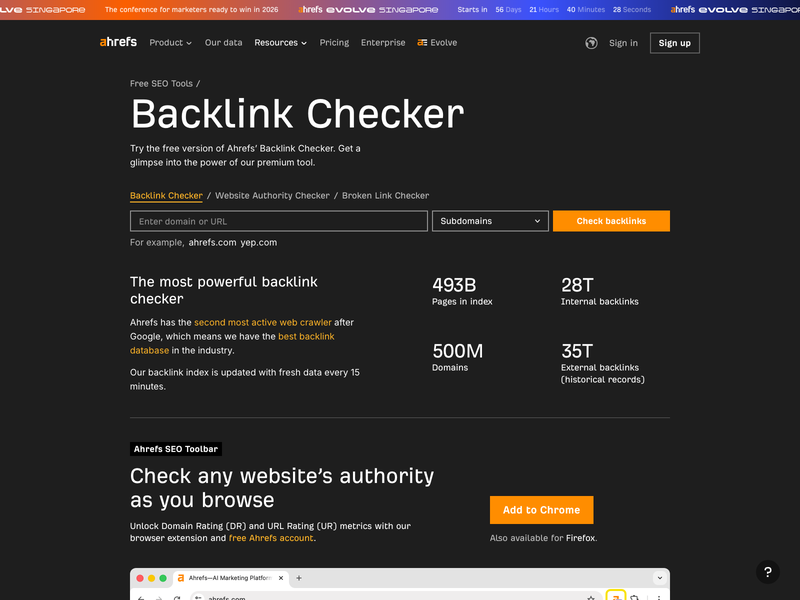
Connect structure has gone through a substantial change in 2026. The manual outreach techniques of the past have actually been changed by high-velocity systems that recognize and protect positionings at a speed previously believed difficult. These systems utilize device learning to vet prospective partners for authority, importance, and security in seconds. This enables a massive boost in the volume of high-quality backlinks without the risk associated with older, less advanced automation. In the local area, brand names are using these tools to build local authority by targeting regional news outlets and industry-specific blogs with precision.
The idea of link velocity is no longer practically the variety of links obtained gradually. In 2026, it describes the tactical timing of link acquisition to match the increasing interest in a specific topic. Predictive tools alert groups to these rising interests, permitting them to flood the marketplace with pertinent links just as the search engine's spiders are searching for fresh authority signals. This integrated approach ensures that content is supported by a strong backlink profile at the specific minute it needs to rank. The speed of this procedure is a defining attribute of effective 2026 campaigns.
Quality assurance stays a concern in spite of the increased rate. Modern AI filters can identify a "link farm" or a low-grade website far much better than a human ever could. These filters evaluate the site's outgoing link patterns, traffic sources, and content creativity to make sure every placement includes real worth. Companies wanting to scale their outreach typically find that Asia Virtual Solutions Honest Software Comparisons provides the required framework to handle large-scale campaigns without sacrificing stability. This balance of speed and quality is what separates top-tier entertainers from the remainder of the market.
AI Scaling and Content Intelligence for Organic Growth
Scaling material production has reached brand-new heights in 2026. Generative intelligence is no longer utilized simply to write drafts however to manage entire content cycles. These systems examine search intent at a granular level, determining exactly what info a user requires at every phase of their search. In the surrounding areas, regional businesses utilize these insights to create hyper-targeted material that deals with particular local issues or interests. This localized approach, powered by device intelligence, permits for a level of personalization that was formerly difficult at scale.
Material intelligence tools now predict the "decay rate" of an article. They inform editors when a piece of material will likely lose its significance and suggest specific updates to keep it fresh. This avoids the sluggish decrease in rankings that frequently pesters older sites. By keeping a consistent state of optimization, brands ensure their digital properties continue to perform year after year. The automation of this process suggests that material teams can focus on top-level strategy and imaginative direction instead of the laborious work of manual updates.
The integration of AI into the workflow has also changed how groups are structured. The role of the conventional SEO professional has actually expanded to consist of aspects of data engineering and timely architecture. These professionals are accountable for training the AI on the brand's special voice and making sure the output meets stringent quality standards. This human-in-the-loop system ensures that while the volume of content boosts, the value to the reader stays high. In the competitive environment of the local market, this dedication to quality is what constructs long-lasting trust with audiences.
Technical SEO Simulation and Digital Twins
One of the most innovative strategies in 2026 is making use of digital twins for technical SEO. A digital twin is a virtual reproduction of a site where developers can check changes in a simulated environment before pushing them live. This allows for the prediction of how a site's performance will alter under different conditions. For instance, a business may simulate how a brand-new site architecture affects the crawl budget plan or how a modification in JavaScript execution impacts core web vitals. This minimizes the threat of making modifications that could adversely impact rankings.
Predictive technical SEO also involves keeping an eye on the health of the web at big. Systems track the latency of DNS suppliers, the uptime of content shipment networks, and the general speed of the internet in specific areas like the region. If a downturn is found, the site can immediately adjust its resource packing to compensate. This level of technical dexterity makes sure that the user experience stays constant no matter external aspects. In 2026, technical excellence is not almost following a list however about consistent adaptation.
Online search engine have likewise end up being more efficient at crawling. They prioritize websites that demonstrate a high degree of technical reliability and structured information precision. Predictive designs assist recognize which parts of a website are most likely to be crawled and indexed, permitting groups to prioritize their technical efforts. This targeted technique guarantees that the most valuable pages get the most attention from search bots. For a specialized digital firm, these technical simulations are an important part of the preparation process.
Data Privacy and Ethical AI in 2026 Projects
As predictive analytics end up being more powerful, the concentrate on data privacy has actually intensified. In 2026, search strategies must comply with rigorous global guidelines that protect user details. This has resulted in the advancement of privacy-first tracking techniques that depend on aggregated, anonymous information rather than private user profiles. Predictive designs are now trained on this cohort-based information, enabling accurate forecasting without compromising personal privacy. This ethical approach to data is a core requirement for any service operating in the local area.
Ethical AI use also encompasses content development. There is a growing demand for openness concerning using machine-generated text. Numerous brand names now use watermarking innovation or clear disclosures to notify readers when AI was associated with the writing process. This builds a sense of honesty and avoids the erosion of trust that can take place when AI is used stealthily. In the region, customers have actually revealed a clear preference for brands that are open about their usage of technology. Keeping this openness is a crucial part of brand management in 2026.
The search engines themselves have actually implemented brand-new signals to assess the ethical standing of a site. Websites that engage in manipulative practices, such as "AI spamming" or misleading link building, are rapidly identified and penalized. The algorithms have progressed to reward real knowledge and authoritativeness. This has led to a renewal in the significance of subject matter specialists who work together with AI to ensure the accuracy of the details offered. The synergy between human understanding and machine speed is the hallmark of an effective 2026 campaign.
Future-Proofing Your Browse Method
Preparing for the next stage of search requires a desire to abandon out-of-date principles. The standard "rankings first" mentality has actually been changed by a focus on comprehensive exposure across multiple platforms and formats. Whether it is voice search, visual search, or generative actions, the objective is to be the primary source of details for the user. This needs a flexible technique that can adjust to brand-new user interfaces as they emerge. Services in the regional market that accept this flexibility are the ones more than likely to grow in the years to come.
Investment in information infrastructure is the primary step toward a predictive future. Business require to ensure their data is tidy, accessible, and all set for analysis by AI systems. This typically includes moving far from legacy systems and adopting cloud-native options that provide the necessary scale and speed. As soon as the foundation is in location, the focus can shift to building the models and workflows that drive predictive success. The shift may be intricate, but the rewards for those who master these 2026 techniques are significant.
Collaboration across departments is also important. SEO is no longer a siloed function however is integrated into marketing, advancement, and product teams. By sharing data and insights across the company, companies can create a more cohesive experience for the user. This holistic approach guarantees that every touchpoint is enhanced for both online search engine and humans. As search continues to evolve, the ability to work together and adjust will remain the most valuable asset any company can have.